Flag of Vatican City
Europe
Quick Facts
- Capital
- Vatican City
- Flag adopted
- 1929
- Population
- 882
- Area
- 0.49 km²
- Languages
- Italian, Latin
- Currency
- euro (€) — EUR
- Demonym
- Vatican
- Government
- ecclesiastical elective monarchy
- Subregion
- Southern Europe
- Driving side
- Right
- Timezones
- UTC+01:00
- Independence
- 1929
About This Flag
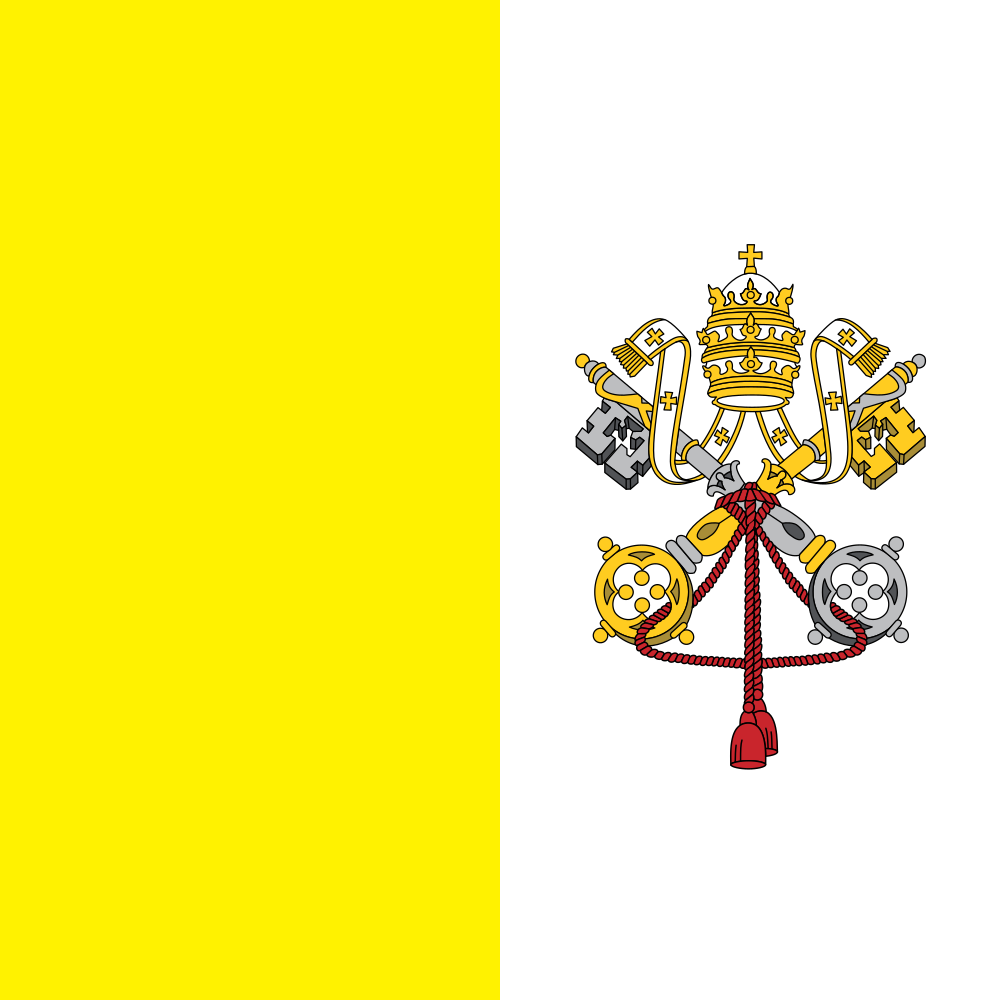
The flag of Vatican City consists of two equal vertical bands of golden yellow on the hoist side and white on the fly side, with the papal coat of arms centered on the white band. The coat of arms features the crossed keys of Saint Peter (one gold, one silver) bound by a red cord, beneath the papal tiara (triple crown).
The gold and silver keys represent the keys to heaven given to St. Peter by Christ, as described in the Gospel of Matthew, with the gold key representing spiritual authority and the silver key representing worldly authority.
The gold and white colors replaced the previous red and gold papal colors in 1808 when Napoleon incorporated the Papal States into the French Empire, and the Pope adopted yellow and white to distinguish his forces. The flag was adopted on June 7, 1929, with the signing of the Lateran Treaty.
What the colors & design mean
Yellow represents the gold key of spiritual power. White represents the silver key of temporal authority. The crossed keys of St. Peter symbolize the papal authority granted by Christ. The triple crown (tiara) represents the pope's three roles as father of kings, governor of the world, and Vicar of Christ.
Pattern: Vertical Stripes
Bordering countries (1)
Fun Facts
- Vatican City's flag is one of only two square national flags in the world, along with Switzerland's.
- The Vatican flag was established by the 1929 Lateran Treaty between the Holy See and Italy, which also created Vatican City as an independent state — resolving the 'Roman Question' that had persisted since Italian unification in 1870.
- Vatican City is the smallest internationally recognized independent state in the world by both area (0.44 km²) and population (about 800 residents).
- The gold-and-white colors replaced the traditional papal red-and-gold when Pope Pius VII changed the colors of the papal militia in 1808 to distinguish them from Napoleon's troops after the French annexation of the Papal States.
Similar looking flags
These flags share similar colors and patterns:
More Europe Flags
🇦🇱 Albania · 🇦🇩 Andorra · 🇦🇹 Austria · 🇧🇾 Belarus · 🇧🇪 Belgium · 🇧🇦 Bosnia and Herzegovina · 🇧🇬 Bulgaria · 🇭🇷 Croatia
Explore by Category
Test Your Knowledge!
Think you can identify the flag of Vatican City?
Play Flag Quiz