Flag of Portugal
Europe
Quick Facts
- Capital
- Lisbon
- Flag adopted
- 1911
- Population
- 10,749,635
- Area
- 92,090 km²
- Languages
- Portuguese
- Currency
- euro (€) — EUR
- Demonym
- Portuguese
- Government
- semi-presidential republic
- Subregion
- Southern Europe
- Driving side
- Right
- Timezones
- UTC-01:00, UTC
- Independence
- 1640
Religions
- Roman Catholic 68.1%
- Unspecified 15.1%
- None 12%
- Protestant 1.8%
- Other 1%
About This Flag
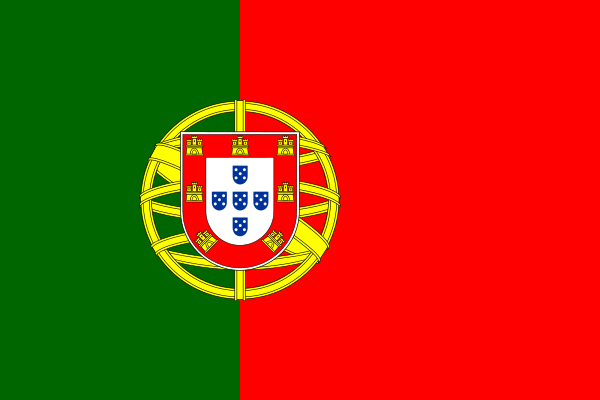
The flag of Portugal consists of an unequal vertical bicolor of green on the hoist side (two-fifths of the flag) and red on the fly side (three-fifths), with the national coat of arms centered on the color boundary. The coat of arms features a golden armillary sphere (a navigational instrument symbolizing Portugal's maritime exploration) overlaid with the Portuguese shield — five small blue shields arranged in a cross pattern, each containing five white dots (bezants), surrounded by a red border with seven gold castles.
The green and red replaced the previous royal blue and white following the republican revolution of October 5, 1910. The flag was adopted on June 30, 1911.
What the colors & design mean
Green represents hope and the sea during the Age of Discovery. Red symbolizes the blood of those who died serving the nation. The armillary sphere represents Portugal's maritime heritage. The five blue shields reference a legendary victory at the Battle of Ourique, and the seven castles represent fortifications conquered from the Moors.
Pattern: Vertical Stripes
Bordering countries (1)
Fun Facts
- Portugal's previous flag was blue and white, the traditional royal colors — the green and red were adopted after the 1910 republican revolution, and the color change was controversial at the time.
- The armillary sphere on the flag was a navigational tool used by Portuguese explorers and became a symbol of the country's Age of Discovery, when Portugal built the first global maritime empire.
- The five blue shields (quinas) on the coat of arms are said to represent five Moorish kings defeated at the Battle of Ourique in 1139, and each shield contains five white bezants arranged in a cross.
- Portugal and England (later Britain) have maintained the Treaty of Windsor since 1386, making it the oldest alliance in the world still in force.
Similar looking flags
These flags share similar colors and patterns:
More Europe Flags
🇦🇱 Albania · 🇦🇩 Andorra · 🇦🇹 Austria · 🇧🇾 Belarus · 🇧🇪 Belgium · 🇧🇦 Bosnia and Herzegovina · 🇧🇬 Bulgaria · 🇭🇷 Croatia
Explore by Category
Test Your Knowledge!
Think you can identify the flag of Portugal?
Play Flag Quiz