Flag of Sudan
Africa
Quick Facts
- Capital
- Khartoum
- Flag adopted
- 1970
- Population
- 51,662,000
- Area
- 1,886,068 km²
- Languages
- Arabic, English
- Currency
- Sudanese pound (ج.س) — SDG
- Demonym
- Sudanese
- Government
- presidential republic
- Subregion
- Northern Africa
- Driving side
- Right
- Timezones
- UTC+03:00
- Independence
- 1956
About This Flag
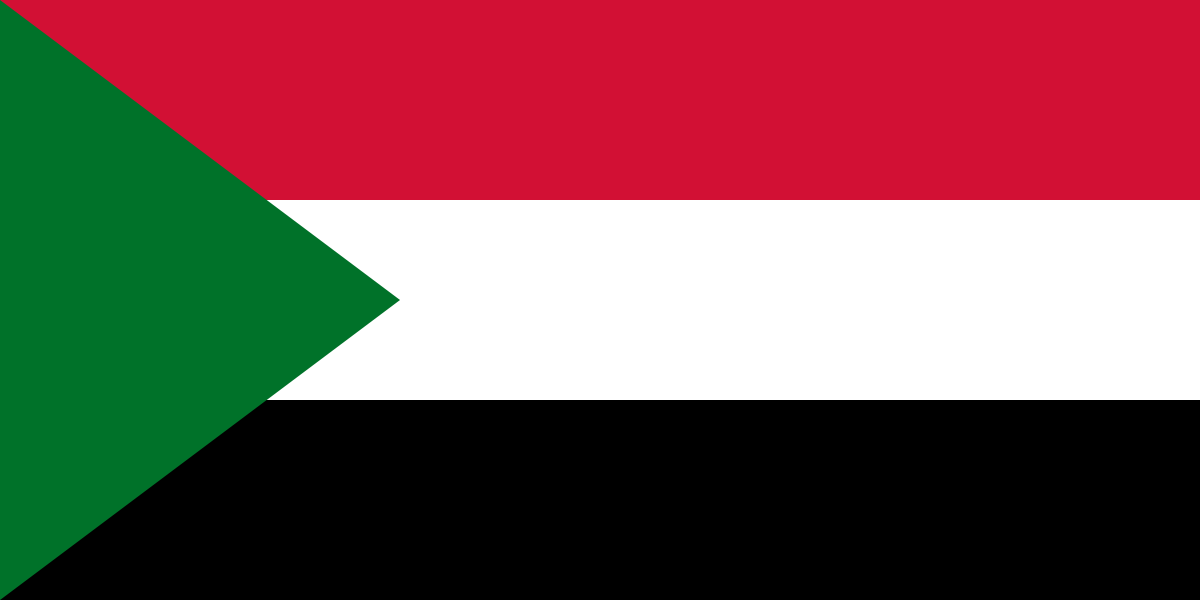
The flag of Sudan features three equal horizontal stripes of red, white, and black, with a green triangle at the hoist. Adopted on May 20, 1970, after the May 1969 coup led by Jaafar Nimeiry, the flag uses the Pan-Arab colors found in numerous flags across the Arab world.
Red symbolizes struggle and the blood of martyrs, white represents peace, optimism, and light, black stands for Sudan itself (the name means 'land of the blacks' in Arabic), and green represents Islam, agriculture, and prosperity. The design closely follows the Arab Liberation Flag palette used since the 1952 Egyptian revolution.
What the colors & design mean
Red symbolizes the struggle for independence and martyrs' sacrifice; white represents peace and optimism; black stands for the nation's name and its people; green represents Islam, prosperity, and agricultural wealth.
Pattern: Horizontal Stripes
Bordering countries (7)
Fun Facts
- Sudan has more pyramids than Egypt — over 200 Nubian pyramids are found at Meroe and other ancient sites.
- The confluence of the White Nile and Blue Nile occurs at Khartoum, the capital, creating the main Nile River.
- Sudan was the largest country in Africa by area until South Sudan's independence in 2011.
- The ancient Kingdom of Kush, centered in present-day Sudan, once conquered and ruled Egypt as its 25th Dynasty.
Similar looking flags
These flags share similar colors and patterns:
More Africa Flags
🇩🇿 Algeria · 🇦🇴 Angola · 🇧🇯 Benin · 🇧🇼 Botswana · 🇧🇫 Burkina Faso · 🇧🇮 Burundi · 🇨🇲 Cameroon · 🇨🇻 Cape Verde
Explore by Category
Test Your Knowledge!
Think you can identify the flag of Sudan?
Play Flag Quiz