Flag of Iceland
Europe
Quick Facts
- Capital
- Reykjavik
- Flag adopted
- 1944
- Population
- 391,810
- Area
- 103,000 km²
- Languages
- Icelandic
- Currency
- Icelandic króna (kr) — ISK
- Demonym
- Icelander
- Government
- unitary parliamentary republic
- Subregion
- Northern Europe
- Driving side
- Right
- Timezones
- UTC
- Independence
- 1918
Religions
- Evangelical Lutheran Church of Iceland 58.6%
- Other 18.7%
- None 7.7%
- Roman Catholic 3.8%
- Independent Congregation of Reykjavik 2.6%
- Independent Congregation of Hafnarfjordur 1.9%
- pagan worship 1.5%
- Icelandic Ethical Humanist Association 1.4%
About This Flag
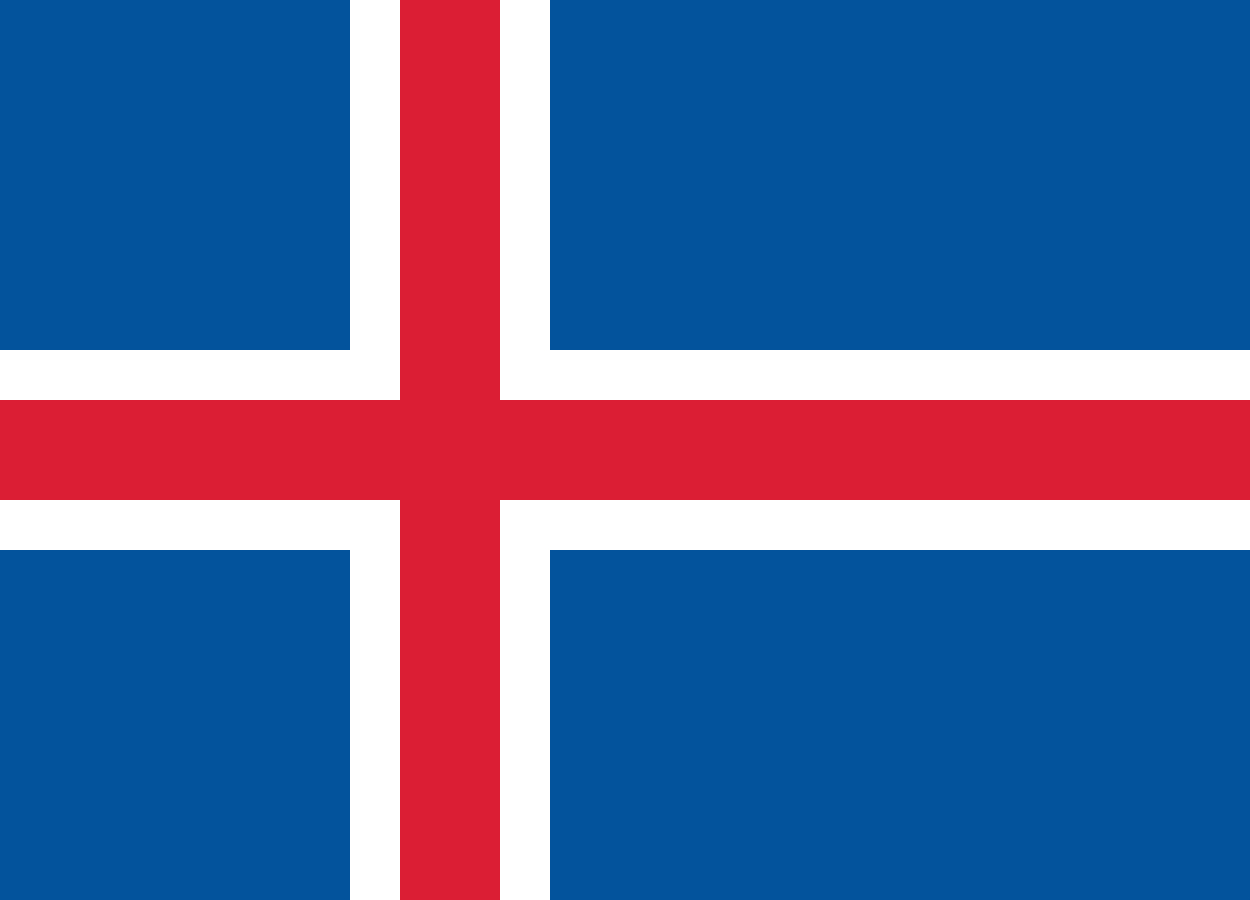
The flag of Iceland features a blue field with a red Nordic cross outlined in white, offset toward the hoist in the Scandinavian tradition. The blue represents the mountains and the Atlantic Ocean surrounding the island, the white symbolizes the ice and snow of the glaciers, and the red represents the volcanic fire that shaped the island's dramatic landscape.
The flag was first adopted on June 19, 1915, for use on Icelandic vessels, and became the civil national flag on December 1, 1918, when Iceland became a sovereign state in personal union with Denmark. It was retained without change when Iceland became a fully independent republic on June 17, 1944.
What the colors & design mean
Blue represents the Atlantic Ocean and Iceland's mountains. White symbolizes ice, snow, and the glaciers that cover about 11% of the island. Red represents the volcanic activity and fire that continuously shapes the Icelandic landscape. Together, the colors capture the island's defining natural features: ice, ocean, and fire.
Pattern: Cross Design
Fun Facts
- Iceland's flag colors neatly represent its famous natural contrasts: blue for ocean, white for ice and glaciers, and red for volcanic fire — the island sits on the Mid-Atlantic Ridge where the Eurasian and North American tectonic plates diverge.
- The Althing (Althingi), Iceland's parliament, was founded in 930 AD at Thingvellir and is considered one of the oldest parliamentary institutions in the world.
- Iceland has no standing army and has been ranked as one of the most peaceful countries in the world since the Global Peace Index began in 2007.
- The flag follows the Scandinavian cross design tradition started by Denmark's Dannebrog, affirming Iceland's Nordic cultural heritage despite its geographic isolation in the North Atlantic.
Similar looking flags
These flags share similar colors and patterns:
More Europe Flags
🇦🇱 Albania · 🇦🇩 Andorra · 🇦🇹 Austria · 🇧🇾 Belarus · 🇧🇪 Belgium · 🇧🇦 Bosnia and Herzegovina · 🇧🇬 Bulgaria · 🇭🇷 Croatia
Explore by Category
Test Your Knowledge!
Think you can identify the flag of Iceland?
Play Flag Quiz